Copenhagen Airport Increases Profit in the First Half of the Year
Copenhagen Airports A/S reported a profit before tax of DKK 851 million in the first half of 2026. Global demand for air travel remains strong, and more passengers are choosing to travel via Copenhagen. Significant investments are being made to prepare the airport for future growth.
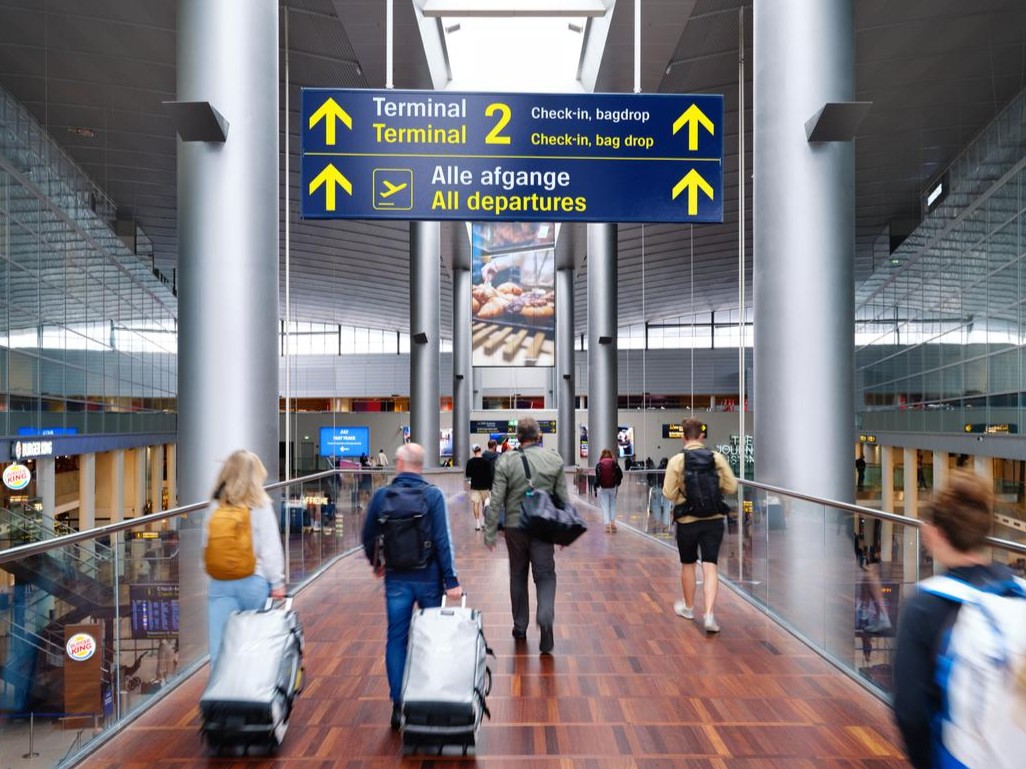
Copenhagen Airport is strengthening its position as the largest international airport in the Nordic region and a key transport hub. In the first six months of 2026, 16.1 million passengers travelled through the airport, representing a 9% increase compared with the same period last year.
“The airport has never welcomed more passengers during a six-month period. Global demand for air travel remains strong despite rising fuel prices, and more passengers are choosing to travel via Copenhagen,” says Christian Poulsen, CEO of Copenhagen Airport.
The growing number of passengers contributed to the airport’s first-half financial results, with Copenhagen Airport reporting a profit before tax of DKK 851 million.
“We are pleased with the result, which is 43% higher than last year. This is due both to increased passenger numbers and the sale of our stake in Smarter Airports. Together with Netcompany, we developed the Airhart IT platform, which plays a vital role in our efficient operations. Airhart is now well integrated into the airport, and our focus is therefore on our core business: operating the airport and ensuring sufficient capacity so that Denmark will continue to benefit from an efficient airport in the future,” says Christian Poulsen.
Traffic Growth Drives Revenue
Total revenue for the first six months of the year amounted to DKK 2.8 billion, an increase of 9% compared with last year.
During the first half of the year, an average of 710 passenger air traffic operations took place each day. The aeronautical revenue amounted to DKK 1.721 billion, which was 11% higher than last year.
Non-aeronautical revenue, including income from the shopping centre, the parking business, hotels and leasing of buildings and premises, amounted to DKK 1.05 billion in the first half of the year, corresponding to an increase of 6%.
Strong Growth in Transfer Passengers
A growing number of passengers continue to travel via Copenhagen Airport on their journeys to destinations around the world. In the first half of 2026, 4.3 million passengers transferred through the airport, 31% more than in the same period last year.
“Transfer passengers account for a significant share of overall passenger growth at the airport. Today, more than one in four passengers, or 27%, connect through Copenhagen, and this development strengthens our position as the largest aviation hub in the Nordic region,” says Christian Poulsen.
The vast majority of transfer passengers are Norwegian, Swedish and Danish travellers changing flights in Copenhagen before continuing to destinations across Europe, North America and Asia. At the same time, the number of American and Asian travellers using Copenhagen as a gateway to Europe is increasing.
The high share of transfer passengers helps secure additional intercontinental routes to and from Copenhagen.
“Transfer traffic is crucial for Denmark. It makes it possible to establish and maintain direct routes to the rest of the world, routes that would not exist without a strong transfer base. This benefits Danish businesses and strengthens Denmark’s international connectivity,” says Christian Poulsen.
Preparing the Airport for the Future
Growing demand for air travel requires greater capacity in the airport of the future. In the first half of 2026, Copenhagen Airport invested DKK 1.167 billion.
“We need to be ready for future demand and are continuously developing the airport’s facilities. This includes creating additional aircraft stands and providing more space for passengers so that we can continue to deliver a positive travel experience. Next year, the new terminal area in Terminal 3 will open. It will feature expanded passport control and baggage handling facilities, as well as additional space for passengers, including more restaurants, shops and lounge areas,” says Christian Poulsen.
Copenhagen Airport is also working on the long-term framework for the airport’s future development. Since the Danish Parliament adopted the Land Use Act in 2023, the airport has actively contributed to the development of a new planning framework.
“We need to reconfigure the airport if we are to accommodate the latest generation of aircraft in the future, while continuing to develop our terminal areas. This requires a new planning framework with the flexibility needed to support the airport’s development for many years to come,” says Christian Poulsen.
Focus on Environmental Impact
Alongside continued growth, the airport is investing in measures designed to improve air quality and reduce noise. Copenhagen Airport has launched a range of initiatives to reduce air pollution from aircraft for the benefit of both employees and residents living near the airport. For example, the airport uses thermal imaging cameras and artificial intelligence to monitor whether aircraft auxiliary power units (APUs) remain switched off while parked at the stand. APUs are generally unnecessary at Copenhagen Airport because aircraft are connected to the airport’s central power supply and ventilation systems.
The programme also includes the electrification of airport vehicles and equipment. Copenhagen Airport is replacing vehicles and ground support equipment previously powered by petrol and diesel with electric alternatives. By 2025, 41% of all vehicles had been converted to electric power. Airport vehicles for which no electric alternative is currently available have been running on HVO biodiesel, which produces lower levels of air pollution, since 2025.
To strengthen knowledge of local air quality, the airport installed 18 new sensors in spring 2026 that continuously measure ultrafine particles, particularly around aircraft stands. The sensors will provide detailed data showing where measures to reduce ultrafine particles can have the greatest impact. Data from the sensors located closest to neighbouring communities is expected to be published on the airport’s website before the end of the year.
Geopolitical Uncertainty
Global aviation continues to be affected by developments in the Middle East. During the first half of the year, 310,000 passengers travelled on routes between Copenhagen Airport and destinations in the Middle East. This was 140,000 fewer passengers than last year, corresponding to a 30% decline in traffic.
“At the start of the crisis, most air services between Denmark and countries in the Middle East were suspended, which affected several thousand travellers. After a few weeks, most airlines resumed operations, although with fewer flights,” says Christian Poulsen.
One consequence of the crisis in the Middle East has been an increase in crude oil prices and therefore in aviation fuel prices, which represent a substantial share of airlines’ operating costs.
“High fuel prices have not had a significant impact on traffic at Copenhagen Airport in the first half of the year, but we are monitoring developments closely. A small number of airlines have adjusted the number of departures, typically on routes with several daily services,” says Christian Poulsen.
Outlook for 2026
Copenhagen Airport has never welcomed more passengers and is currently in the midst of a record year. However, growth in travel demand has slowed, and on that basis Copenhagen Airport is revising its passenger outlook for 2026 to 34.5 million (previously 35.5 million), which remains significantly above last year’s passenger volume of 32.4 million.
Revenue growth is expected to remain around 7%, supported by a favourable passenger mix.
Despite the revised passenger outlook, Copenhagen Airport is raising its profit before tax outlook for the year. This is partly due to the positive impact of the divestment of the company Smarter Airports.
Based on an expected passenger volume of approximately 34.5 million, profit before tax for 2026 is now expected to be between DKK 1.80 billion and DKK 1.95 billion (previously between DKK 1.75 billion and DKK 1.90 billion).
There remains uncertainty surrounding the outlook due to geopolitical and macroeconomic conditions that could adversely affect travel activity and, consequently, Copenhagen Airport’s financial performance.